Sparkworks Studios · Evaluation
End-to-end evaluation
Monitoring, evaluation and learning for arts, heritage and community programmes, from the first conversation about what change looks like to the final report, with tools your team can keep using.
Tell us what your brief asks for, and choose from a menu of methods. We’ll shape an evaluation that fits your programme, your people and your budget.
New to evaluation? Start with the plain-English guide →
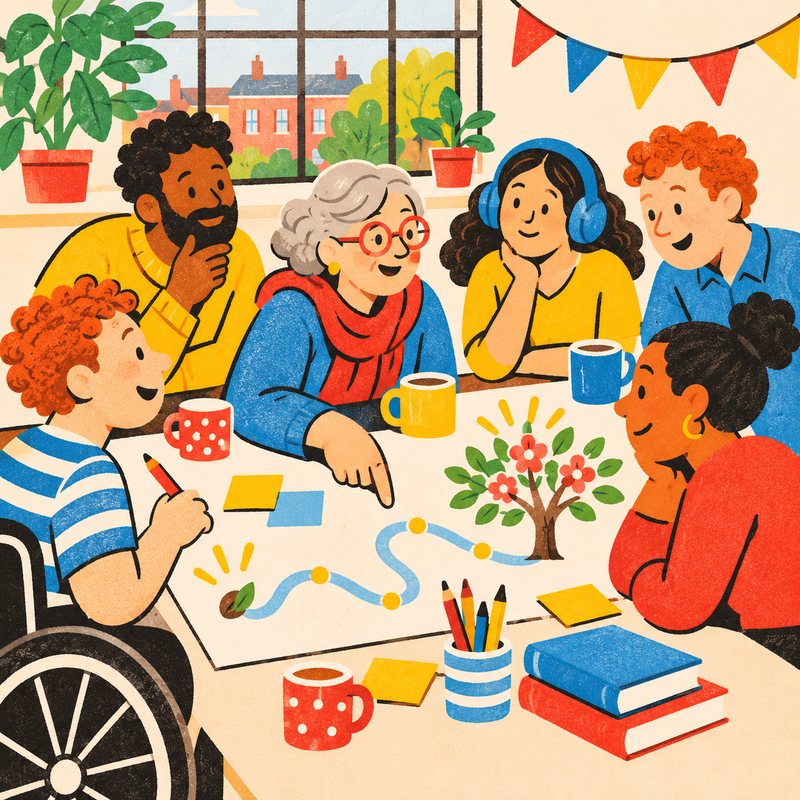
Watch: how we evaluate, in 90 seconds
Narrated, with the words on screen.
Four stages, one joined-up process
Agree what change looks like, and how you’ll know.
- Theory of Change builderFrom the situation to the long-term change, with a diagram.
- Evaluation framework builderQuestions, evidence, who collects what and when.
- Methodology menuChoose the types, approaches and methods that fit.
- Evaluation explainedThe words funders use, in plain English.
- With us: Facilitated workshops with your team and participants
Gather evidence in ways people will actually use.
- Participant feedbackA one-minute form on a phone.
- Easy-read feedbackLarge buttons, pictures and a spoken question.
- Story collectorStories of change, with consent that travels with them.
- With us: Observation, interviews and creative methods
- With us: Training your team to collect routine data
Work out what the evidence is telling you, together.
- Programme dashboardFeedback from many sessions in one view.
- With us: Independent analysis
- With us: Sense-making sessions with participants and partners
- With us: Learning reviews each term
Say what changed, and change what you do next.
- Report builderA first draft for funders, trustees or your team.
- With us: Interim and final reports
- With us: Case studies
- With us: Creative ways to share findings, such as a quiz night for staff
- With us: Presentations to boards and funders
Linked items are working tools you can try now. “With us” items are what we do alongside them.
What makes us different
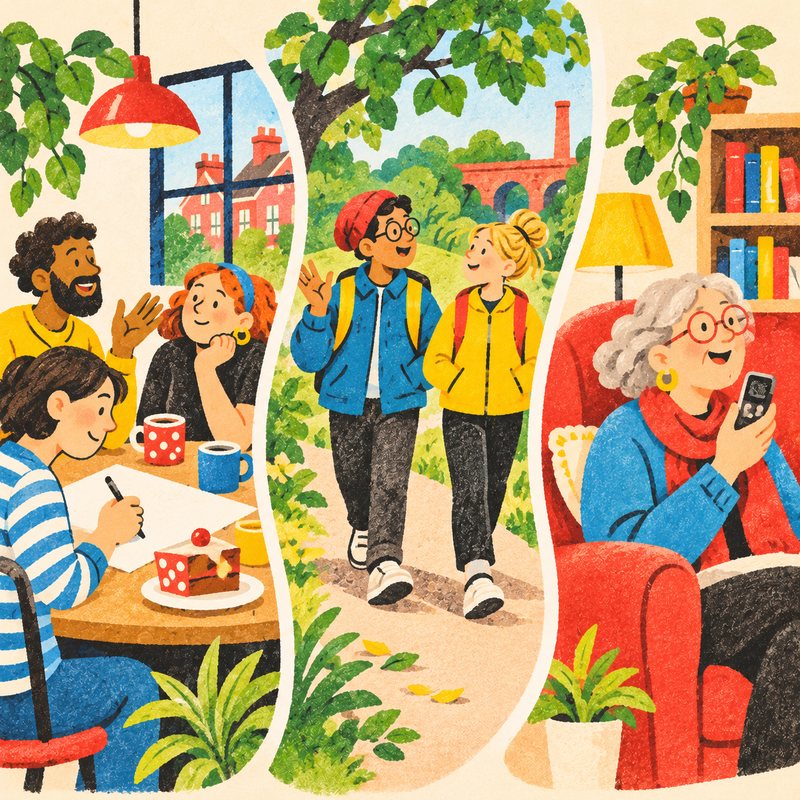
Creative techniques
We’re artists as well as evaluators, so we don’t rely on forms alone. We run evaluation cafés, where people talk over tea and cake; learning walks, where we walk and talk through a place or session together; and audio diaries, where participants take a voice recorder away and tell us what’s changing in their own time. Groups can write an evaluation song or make a radio show about what changed. And we tell the story of the work in creative ways too, such as a findings quiz night for staff.
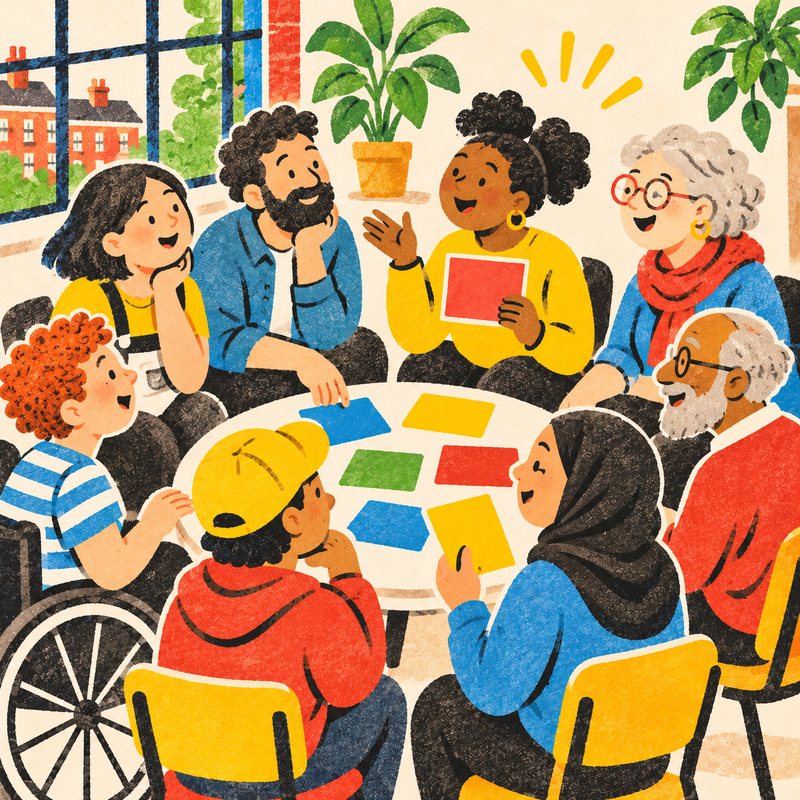
Co-creation
We don’t evaluate people from the outside. The people taking part help choose the questions, gather the evidence and make sense of it with us. That is how an evaluation hears what matters to them, not only what a funder asked.
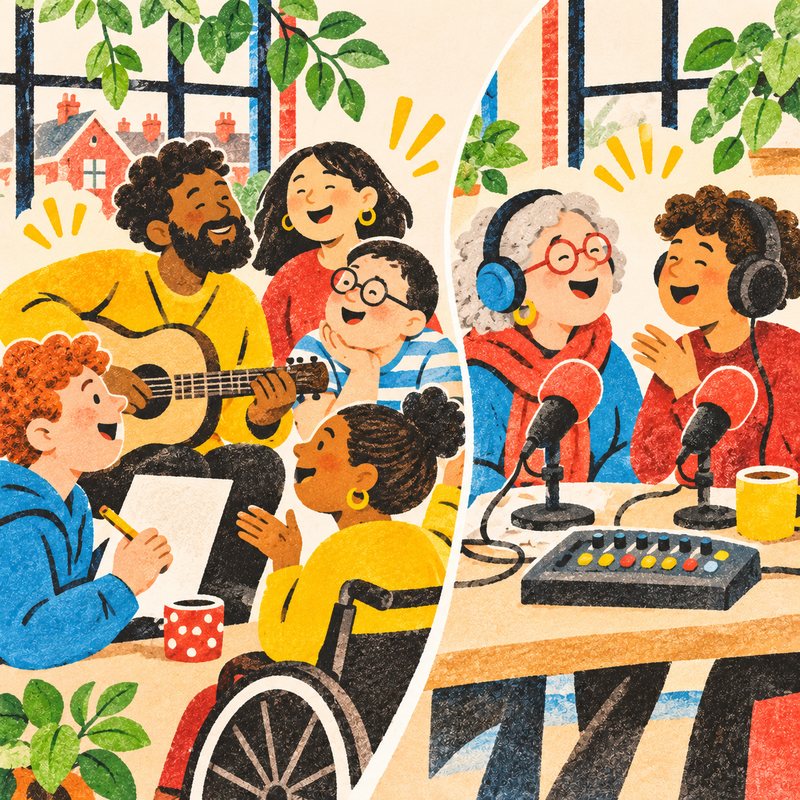
Songs and radio shows
A group writes a song about what changed, or makes its own radio show.

Photos and rivers
People photograph what matters, or draw their journey as a river.
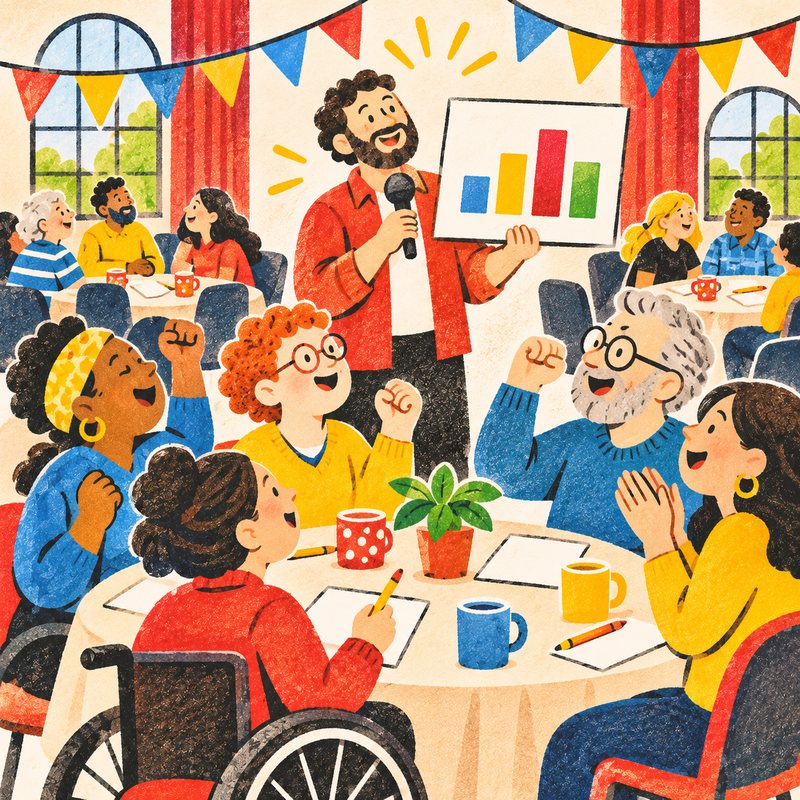
A findings quiz night
Your staff guess the results before they’re revealed. It beats a report nobody reads.
All of these, and more, are on the methodology menu. Some are Sparkworks originals that we’d pilot with you.
How we work
Proportionate
The evaluation fits the size of the programme. A small project gets a one-page framework and two or three methods.
People-centred
The people taking part help shape the questions and make sense of the findings.
Built to hand over
We set up the tools, train your team, and step back as they take on routine monitoring.
Our approach follows the Centre for Cultural Value’s Evaluation Principles and the Magenta Book, the UK government’s evaluation guidance. Each tool lists its sources.
Experience
- British Council, World Voice. Led programme evaluation and wrote the final impact report for 2017 to 2020, on an international teacher development programme that used singing as a tool for learning.
- Southwark Council. Evaluated specialist SEND programmes and out-of-school provision, as founder of a multi-site creative childcare organisation.
- Royal Albert Hall. Currently evaluating and developing the participatory Songbook programme.
Catherine Burgis is a member of the UK Evaluation Society, a qualified teacher and a working artist.
About the tools. These are working prototypes developed on live projects, which we adapt and test with each client. What you type into them stays in your browser; nothing is sent to us. Examples that use made-up people or numbers say so.
Have an evaluation brief? Let’s talk.
I’m Catherine Burgis at Sparkworks Studios. Send me your brief, or the outline of one, and I’ll tell you how I’d approach it and what it would take.
Email Catherine about your evaluation
hello@sparkworksstudios.co.uk